

Answers reflect the 2026 terms; 2027 details TBA.
What does registration include?
Meals, lodging, 24-hr access to the AHSLC grounds and facilities, and the collection privileges afforded by our NPS permit.
Where will I stay?
Lodging at the AHSLC is extremely limited (approx. ten beds). Alternate lodging options include camping on the station’s tent platforms (weather permitting), as well as off-site lodging, which is available within 30 minutes of the station. Any off-site accommodations must be arranged independently, as well as daily transportation to and from the station/field.
What should I bring?
Participants are strongly encouraged to provide their own microscope(s) and any accompanying micro- and/or macro-photography equipment, in order to meaningfully contribute to our inventorying efforts. A more detailed packing list is provided to participants ahead of their arrival.
Can I attend for part of the Foray?
Those wishing to participate for fewer than the full eight days are encouraged to contact korfforay@gmail.com to arrange for a reduced/prorated registration rate.
Can you help with getting there?
Transportation to and from neighboring major airports may also be arranged in advance at no additional charge.
Are scholarships available?
Scholarships are available to students of ascomycetology for whom travel and registration costs represent an undue financial burden. Apply by submitting a cover letter to korfforay@gmail.com containing your name, age, pronouns, institutional affiliation (if any), area of taxonomic interest or expertise, background in mycology, and the goals you hope to achieve in attending the Korf Foray. Applications must be submitted no later than two months before the start of the Foray.
How does collecting work?
Collections are made to herbarium-grade standards, databased in accordance with National Park Service guidelines (MCMS), and tissue sampled on-site for future DNA sequencing. Vouchers are accessioned by the Korf Foray’s ongoing institutional partner, the University of Tennessee Herbarium (TENN), with accompanying observations added to the Foray’s ongoing iNaturalist project. Allowances may be made for temporarily housing collections in participants’ home or personal fungaria, so long as certain requirements are met in advance, as stipulated in our National Park Service collection permit.
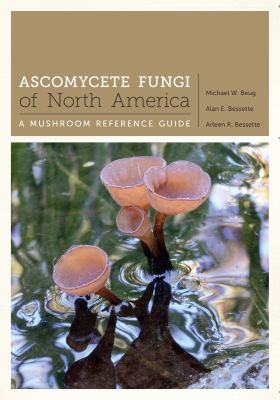 2014
Michael Beug, Alan Bessette and Arlene Bessette publish Ascomycete Fungi of North America, the first major reference on the continent’s ascomycetes in over half a century.
- 2016
The Ascomycetes of North America (AONA) Facebook group is founded in August. Dr. Korf passes away at the age of 91 at his home in Ithaca later that month. In November, AONA group members are polled about the prospect of forming an ascomycete-focused Foray somewhere on the continent. There is precedent in Europe but none in the western hemisphere.
- 2018–2019
Danny Newman serves as the first curatorial intern at the Cornell University Plant Pathology Herbarium (CUP) — Dr. Korf’s home institution — under Dr. Teresa Iturriaga (curator) and Dr. Kathie Hodge (director), and decides to dedicate the Foray to him.
- 2020
The First Richard P. Korf Memorial North American Ascomycete Foray is planned for the spring of 2020, located at the Opal Creek Ancient Forest Center near Lyons, Oregon. The COVID-19 pandemic and the catastrophic Beachie Creek Fire initially postpone and then cancel the event.
- 2023
After much planning, the first Korf Foray is finally held from August 14–17 at the Highlands Biological Station in Highlands, North Carolina. It brings together 22 participants from four countries, treated to four guest lecturers. Three Kumi Korf Scholarships are awarded. With support from Discover Life in America, registrants also attend the Purchase Knob AscoBlitz, August 18–20, at the Appalachian Highlands Science Learning Center in Great Smoky Mountains National Park. The resulting checklist and abstract appear in the final issue of Mycotaxon before its unfortunate closure. Most collections are subsequently accessioned at the Cornell University Plant Pathology Herbarium (CUP).
Invited talks (video):
- 2024
A planned year off.
- 2025
August 1–8. The Appalachian Highlands Science Learning Center becomes the Foray’s sole venue, and the format changes to that of a biodiversity expedition. 17 participants attend from two countries. Two scholarships are awarded. 204 collections are vouchered, 149 of which are successfully DNA-barcoded (ITS). Vouchers are accessioned by the University of Tennessee Herbarium (TENN).
- 2026
July 27 – August 4, the Korf Foray returns to the Appalachian Highlands Science Learning Center with 16 participants from three countries. Three scholarships are awarded. 333 collections are made. Vouchers are being accessioned by the University of Tennessee Herbarium (TENN).
- 2027
June 2027 (exact dates TBA), Appalachian Highlands Science Learning Center.


Source: Newman, D. S. (2026, August 23). In reverence of the small: The Korf Foray and ascomycetology in North America [Video]. YouTube.
Korf Foray Organizing Team (KFOT)
Danny Newman
Lead Organizer
Rees Cronce
Co-organizer
Emma Dombkowski
Co-organizer
Ascomycete.org
Founding and continuing patron of the Korf Foray. Close collaborator on an in-progress manuscript summarizing the Foray’s findings to date.
Great Smoky Mountains National Park
Collecting site for the Purchase Knob AscoBlitz (2023) and Korf Foray (2025–), in close collaboration with the National Park Service.
Appalachian Highlands Science Learning Center
Previous Purchase Knob AscoBlitz host venue (2023), current Korf Foray host venue (2025–).

Discover Life in America
Founding and continuing patron of the Korf Foray. Close collaborator in support of the park’s All Taxa Biodiversity Inventory.
University of Tennessee Herbarium (TENN)
Institutional partner for Foray accessions (2025–).

Highlands Biological Station
Host of the 2023 Korf Foray.
Cornell University Plant Pathology Herbarium (CUP)
Institutional partner for Foray accessions (2023).